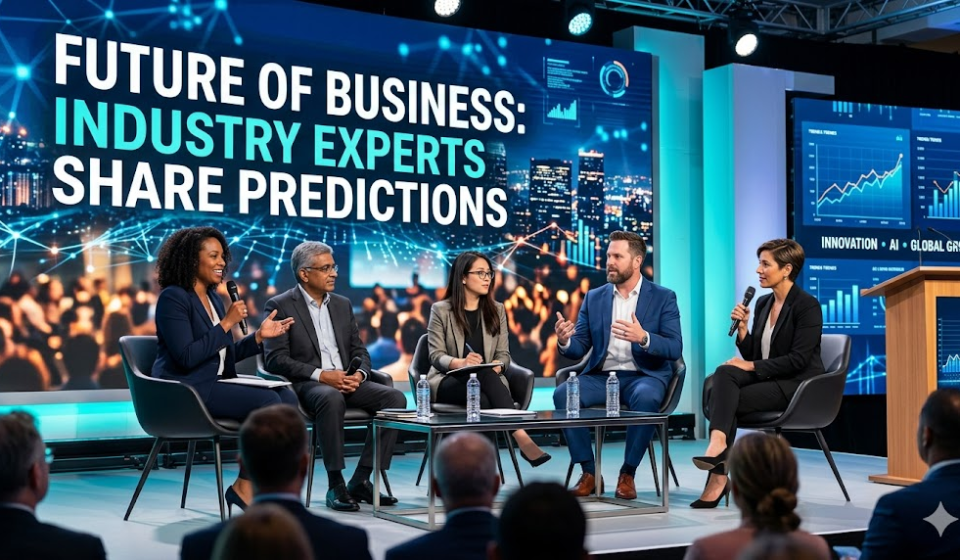

The business world is evolving faster than ever. Advances in artificial intelligence, changing consumer expectations, economic shifts, and digital transformation are reshaping industries across the globe. Companies that once relied on traditional strategies are now adapting to a future driven by technology, data, and innovation.
While no one can predict the future with complete certainty, industry leaders, entrepreneurs, investors, and analysts agree on one thing: businesses that embrace change will be better positioned for long-term success.
Here are some of the most significant predictions experts are making about the future of business and what organizations can do to stay ahead.
1. Artificial Intelligence Will Become a Core Business Function
Artificial intelligence is no longer an experimental technology. It is quickly becoming an essential part of business operations.
Experts predict that AI will move beyond simple automation and become deeply integrated into decision-making, customer service, marketing, product development, and operational management.
Businesses are already using AI to:
- Generate content
- Analyze customer behavior
- Automate repetitive tasks
- Improve customer support
- Predict market trends
- Personalize user experiences
What This Means for Businesses
Companies that learn how to effectively implement AI will likely gain significant advantages in productivity, efficiency, and customer satisfaction. Rather than replacing human talent entirely, AI is expected to enhance human capabilities and enable teams to focus on higher-value work.
2. Remote and Hybrid Work Models Are Here to Stay
The workplace has undergone a dramatic transformation over the past few years. While some organizations have returned to traditional office environments, many experts believe hybrid and remote work will remain a permanent part of the business landscape.
Employees increasingly value flexibility, and companies have discovered that remote work can reduce overhead costs while expanding access to global talent.
What This Means for Businesses
Organizations will need to invest in:
- Collaboration tools
- Virtual communication systems
- Remote management practices
- Employee engagement initiatives
Businesses that successfully support distributed teams may gain a competitive advantage in attracting and retaining top talent.
3. Customer Experience Will Become the Primary Competitive Advantage
Products and services can often be copied. Exceptional customer experiences are much harder to replicate.
Industry experts predict that customer experience will continue to become one of the most important differentiators between successful and struggling businesses.
Consumers now expect:
- Fast responses
- Personalized experiences
- Seamless digital interactions
- Consistent support across channels
What This Means for Businesses
Companies must focus on understanding customer needs and delivering value at every touchpoint. Investing in customer success, support, and relationship-building will be critical for long-term growth.
4. Data-Driven Decision Making Will Dominate Business Strategy
Businesses are generating more data than ever before. However, collecting information is only valuable if organizations know how to use it effectively.
Experts predict that data analytics will become central to decision-making across every department.
From marketing campaigns to product development and financial planning, businesses will increasingly rely on real-time insights rather than assumptions.
What This Means for Businesses
Organizations should prioritize:
- Data collection systems
- Business intelligence platforms
- Analytics capabilities
- Data literacy training
Companies that leverage data effectively will be able to make smarter and faster decisions.
5. Sustainability Will Move From Trend to Requirement
Environmental and social responsibility are becoming increasingly important to consumers, investors, and regulators.
Industry experts believe sustainability will become a fundamental business expectation rather than a marketing advantage.
Customers are paying closer attention to:
- Supply chain practices
- Carbon emissions
- Ethical sourcing
- Corporate responsibility
What This Means for Businesses
Organizations that integrate sustainability into their operations may strengthen brand trust, improve customer loyalty, and reduce long-term risks.
Businesses that ignore these expectations could face reputational and financial challenges.
6. The Rise of the Creator and Solopreneur Economy
Technology has lowered the barriers to starting and growing a business. Experts predict that more individuals will build personal brands, launch digital products, and create independent income streams.
Platforms that support creators, freelancers, consultants, and online entrepreneurs continue to expand.
What This Means for Businesses
Companies may increasingly collaborate with creators, influencers, and independent professionals instead of relying solely on traditional agencies and large teams.
This shift creates new opportunities for partnerships, marketing, and talent acquisition.
7. Generative Search and AI Discovery Will Change Marketing
Traditional search engine optimization is evolving as AI-powered search experiences become more common.
Consumers are beginning to use AI assistants to discover products, services, and information rather than relying exclusively on traditional search results.
Experts predict businesses will need to optimize their content for AI-driven platforms and answer engines.
What This Means for Businesses
Future marketing strategies may include:
- Generative Engine Optimization (GEO)
- AI-friendly content creation
- Structured data implementation
- Authority building through expertise
Visibility in AI-generated responses could become just as important as ranking in traditional search engines.
8. Cybersecurity Will Become a Top Business Priority
As businesses become increasingly digital, cybersecurity threats continue to grow in sophistication.
Experts expect cyberattacks, data breaches, and digital fraud attempts to increase over the coming years.
What This Means for Businesses
Organizations will need stronger investments in:
- Security infrastructure
- Employee training
- Data protection
- Risk management
Cybersecurity will no longer be viewed solely as an IT issue. It will become a business-wide responsibility.
9. Continuous Learning Will Be Essential for Workforce Success
Technology and business practices are evolving rapidly. Skills that are valuable today may become outdated within a few years.
Industry leaders predict that continuous learning will become a critical requirement for both employees and organizations.
What This Means for Businesses
Companies should encourage:
- Professional development
- Skills training
- Leadership education
- Digital literacy
Organizations that prioritize learning may be better equipped to adapt to future disruptions and opportunities.
10. Agility Will Outperform Size
Historically, large companies often dominated markets due to their resources and scale. However, experts increasingly believe that agility will become a more important competitive advantage.
Smaller and more flexible businesses can often respond faster to market changes, customer feedback, and emerging opportunities.
What This Means for Businesses
Organizations should focus on:
- Faster decision-making
- Experimentation
- Innovation
- Adaptability
The ability to pivot quickly may become one of the defining characteristics of successful businesses in the future.
11. Personal Brands Will Carry More Influence
Consumers increasingly prefer to engage with people rather than faceless corporations.
Founders, executives, and industry experts who build strong personal brands often create trust, credibility, and audience engagement that benefits their businesses.
What This Means for Businesses
Leaders should consider sharing:
- Industry insights
- Thought leadership content
- Behind-the-scenes experiences
- Professional expertise
Personal branding may become an essential component of business growth and reputation management.
12. Subscription and Recurring Revenue Models Will Expand
Predictable revenue remains attractive to businesses of all sizes. Experts expect more companies to adopt subscription-based offerings, membership programs, and recurring revenue models.
This trend extends beyond software and includes industries such as education, media, healthcare, consulting, and consumer products.
What This Means for Businesses
Organizations that can create ongoing value for customers may benefit from:
- More predictable cash flow
- Higher customer retention
- Stronger lifetime value
Recurring revenue models can improve both stability and scalability.
Final Thoughts
The future of business will be shaped by innovation, adaptability, and a willingness to embrace change. Artificial intelligence, evolving customer expectations, remote work, sustainability, and digital transformation are already influencing how companies operate and compete.
While technologies and trends will continue to evolve, one principle remains constant: businesses that focus on delivering value, solving real problems, and staying close to their customers will be best positioned for long-term success.
The organizations that thrive in the coming decade will not necessarily be the largest or oldest. They will be the ones that learn quickly, adapt continuously, and embrace the opportunities created by an ever-changing business landscape.