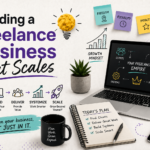


The Software-as-a-Service (SaaS) industry continues to reshape how businesses operate, offering scalable, subscription-based solutions for everything from customer relationship management to project collaboration and cybersecurity. While launching a SaaS product is a significant achievement, sustainable growth requires far more than building great software.
Successful SaaS companies focus on solving customer problems, creating exceptional user experiences, optimizing every stage of the customer journey, and making data-driven decisions. They understand that long-term success comes from balancing customer acquisition with retention, product innovation, and operational efficiency.
This complete SaaS growth playbook outlines proven strategies that can help founders, marketers, and product teams attract customers, increase recurring revenue, and build a resilient SaaS business.
Understanding the SaaS Growth Journey
Growing a SaaS business involves more than increasing sales. Every stage of the customer lifecycle plays a role in long-term success.
A typical SaaS growth journey includes:
- Building a product that solves a real problem
- Attracting the right audience
- Converting visitors into users
- Activating new customers
- Delivering consistent value
- Retaining subscribers
- Expanding customer accounts
- Encouraging referrals and advocacy
Each stage should be optimized continuously to maximize growth.
Step 1: Build Around a Clear Customer Problem
The strongest SaaS products are designed to solve specific challenges rather than offering dozens of unnecessary features.
Ask questions like:
- What problem are customers trying to solve?
- How are they solving it today?
- Why are existing solutions falling short?
- What outcome do customers value most?
The more focused your solution, the easier it becomes to position your product in the market.
Step 2: Define Your Ideal Customer Profile (ICP)
Not every customer is the right customer.
Create a detailed Ideal Customer Profile by identifying:
- Industry
- Company size
- Revenue range
- Geographic location
- Business goals
- Pain points
- Decision-makers
- Budget expectations
A clearly defined ICP improves marketing, sales, and customer success efforts.
Step 3: Create a Strong Value Proposition
Your value proposition should immediately answer three questions:
- What does your software do?
- Who is it for?
- Why is it better than alternatives?
Keep messaging simple, outcome-focused, and customer-centric.
Instead of listing features, explain the results customers can achieve.
Step 4: Build a High-Converting Website
Your website is often the first interaction potential customers have with your business.
Essential pages include:
- Homepage
- Features
- Pricing
- Use Cases
- Customer Stories
- Blog
- Help Center
- Contact Page
Every page should include a clear call to action such as:
- Start Free Trial
- Book a Demo
- Schedule a Consultation
- Get Started
Fast loading speeds, intuitive navigation, and mobile responsiveness are essential.
Step 5: Invest in Content Marketing
Educational content attracts qualified prospects while establishing authority.
Create content such as:
- Blog posts
- Industry guides
- Whitepapers
- Case studies
- Webinars
- Videos
- Tutorials
- Templates
- Checklists
Focus on answering customer questions rather than promoting your product in every article.
Step 6: Strengthen Your SEO Strategy
Organic search remains one of the most cost-effective acquisition channels for SaaS businesses.
Optimize for:
- High-intent keywords
- Long-tail search queries
- Product comparisons
- Problem-solving content
- Industry-specific topics
Support SEO with:
- Internal linking
- Fast page performance
- Structured headings
- Helpful FAQs
- Technical optimization
Publishing consistent, high-quality content builds long-term visibility.
Step 7: Offer a Friction-Free Trial or Demo
Prospective customers want to experience your product before committing.
Depending on your product, offer:
- Free trial
- Freemium plan
- Interactive product tour
- Personalized demo
- Sandbox environment
Reduce signup friction by asking only for essential information during registration.
Step 8: Improve User Onboarding
A customer’s first experience often determines whether they continue using your software.
An effective onboarding process should:
- Highlight key features
- Explain the next steps
- Help users achieve an early success
- Provide tutorials and documentation
- Offer live support when needed
The faster users experience value, the more likely they are to become paying customers.
Step 9: Focus on Product-Led Growth
Many successful SaaS businesses allow the product to drive customer acquisition and expansion.
Product-led growth includes:
- Self-service signups
- In-app guidance
- Usage-based upgrades
- Built-in collaboration features
- Referral incentives
When users experience value quickly, they naturally promote the product to others.
Step 10: Optimize Customer Retention
Acquiring customers is expensive.
Keeping them is far more profitable.
Improve retention by:
- Monitoring customer health scores
- Collecting regular feedback
- Solving support issues quickly
- Releasing meaningful product updates
- Communicating proactively
Reducing churn often has a greater impact on revenue than increasing acquisition.
Step 11: Upsell and Expand Existing Accounts
Existing customers already trust your business.
Growth opportunities include:
- Premium plans
- Additional users
- Advanced features
- Enterprise packages
- Professional services
- Integrations
Expansion revenue strengthens recurring income while reducing customer acquisition costs.
Step 12: Build an Outstanding Customer Success Team
Customer success goes beyond technical support.
Its purpose is to help customers achieve measurable outcomes.
Strong customer success teams:
- Conduct onboarding sessions
- Share best practices
- Monitor product adoption
- Recommend useful features
- Prevent churn
- Build long-term relationships
Happy customers stay longer and spend more over time.
Step 13: Use Data to Drive Decisions
Successful SaaS companies rely on metrics rather than assumptions.
Monitor key performance indicators such as:
- Monthly Recurring Revenue (MRR)
- Annual Recurring Revenue (ARR)
- Customer Acquisition Cost (CAC)
- Customer Lifetime Value (LTV)
- Churn Rate
- Activation Rate
- Trial-to-Paid Conversion
- Net Revenue Retention (NRR)
- Average Revenue Per User (ARPU)
Review these metrics regularly to identify growth opportunities and potential risks.
Step 14: Build Strategic Partnerships
Partnerships can accelerate growth without dramatically increasing marketing costs.
Potential partners include:
- Technology integrations
- Agencies
- Consultants
- Industry influencers
- Affiliate marketers
- Marketplace platforms
Collaborative marketing expands your reach while providing additional value to customers.
Step 15: Continue Innovating
Customer expectations evolve constantly.
Regularly:
- Collect feature requests
- Analyze competitor updates
- Study industry trends
- Test new ideas
- Improve usability
- Expand integrations
Innovation keeps your product relevant and competitive.
Common SaaS Growth Mistakes
Avoid these common pitfalls:
- Targeting everyone instead of a specific audience
- Building features customers didn’t request
- Ignoring customer feedback
- Weak onboarding experiences
- High churn rates
- Underpricing the product
- Neglecting SEO
- Poor customer support
- Scaling before achieving product-market fit
Sustainable growth comes from continuous learning and improvement.
The Future of SaaS Growth
The SaaS landscape continues to evolve rapidly.
Key trends include:
- AI-powered automation
- Personalized customer experiences
- Vertical SaaS solutions
- Usage-based pricing
- Enhanced security and compliance
- No-code and low-code integrations
- Predictive analytics
- Customer success automation
Businesses that adapt to changing customer needs while maintaining product quality will be well-positioned for long-term success.
Final Thoughts
Scaling a SaaS business requires more than acquiring new customers. Sustainable growth comes from understanding your audience, delivering consistent value, optimizing the customer journey, and making informed decisions based on data.
By focusing on product quality, customer success, retention, and continuous improvement, SaaS companies can build predictable recurring revenue and long-lasting customer relationships. Growth is not achieved through a single tactic but through the consistent execution of strategies across every stage of the customer lifecycle.
Whether you’re launching your first SaaS product or expanding an established platform, this playbook provides a strong foundation for building a scalable and resilient software business.
Frequently Asked Questions (FAQs)
1. What is a SaaS growth strategy?
A SaaS growth strategy is a structured plan for acquiring, activating, retaining, and expanding customers while increasing recurring revenue and building a sustainable subscription-based business.
2. What is product-market fit in SaaS?
Product-market fit occurs when a SaaS product effectively solves a meaningful customer problem and consistently satisfies the needs of its target audience, leading to strong adoption and retention.
3. Why is customer retention important for SaaS companies?
Retention directly impacts recurring revenue and profitability. Keeping existing customers is typically more cost-effective than acquiring new ones and often leads to higher lifetime value.
4. What are the most important SaaS metrics?
Key metrics include Monthly Recurring Revenue (MRR), Annual Recurring Revenue (ARR), Customer Acquisition Cost (CAC), Customer Lifetime Value (LTV), churn rate, activation rate, Net Revenue Retention (NRR), and Average Revenue Per User (ARPU).
5. How can content marketing help a SaaS business grow?
Content marketing attracts potential customers through educational resources such as blogs, guides, videos, webinars, and case studies. It builds trust, improves SEO, and supports lead generation.
6. What is product-led growth?
Product-led growth is a business strategy where the product itself drives customer acquisition, activation, and expansion through self-service experiences, free trials, and in-app value.
7. How can SaaS companies reduce churn?
Companies can reduce churn by improving onboarding, offering responsive customer support, monitoring user engagement, collecting feedback, delivering regular product updates, and helping customers achieve measurable outcomes.
8. Should every SaaS business offer a free trial?
Not always. While free trials work well for many SaaS products, some businesses achieve better results with personalized demos, freemium plans, or guided onboarding depending on their target audience and product complexity.
9. How important is SEO for SaaS companies?
SEO is one of the most effective long-term customer acquisition channels for SaaS businesses. Optimized content targeting relevant search queries can consistently generate qualified organic traffic and reduce customer acquisition costs.
10. What is the biggest factor behind long-term SaaS success?
Long-term success comes from consistently delivering customer value, maintaining a reliable product, listening to user feedback, optimizing retention, and adapting to changing market needs while building predictable recurring revenue.