
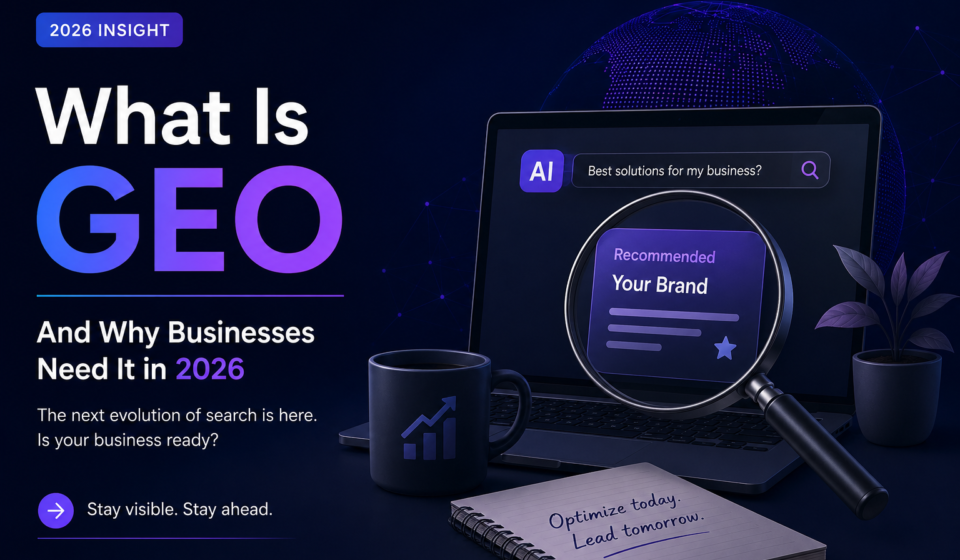

The Search Revolution Nobody Is Talking About Enough
For nearly two decades, businesses have focused on one primary goal: ranking on search engines.
Whether it was creating blogs, building backlinks, optimizing keywords, or improving page speed, the objective remained the same—appear on the first page of search results.
But something fundamental has changed.
Today, millions of users are no longer searching the way they did five years ago. Instead of typing keywords into traditional search engines and clicking through multiple websites, they are asking AI assistants direct questions and receiving immediate answers.
When someone asks:
“What is the best CRM for a small business?”
“What project management software should startups use?”
“Which cybersecurity platform is best for remote teams?”
AI-powered search platforms are increasingly providing answers without requiring users to browse dozens of websites.
This shift has created an entirely new discipline known as Generative Engine Optimization (GEO).
For businesses in 2026, understanding GEO may become just as important as understanding SEO was in the early 2000s.
The companies that adapt early will gain visibility in the next generation of search. Those that ignore it risk becoming invisible.
The Evolution of Search: From Keywords to Conversations
To understand GEO, it helps to understand how search behavior is changing.
Search Era 1: Directories
In the early internet era, users navigated through website directories to find information.
Search Era 2: Traditional Search Engines
Google transformed discovery by ranking pages based on relevance and authority.
Businesses optimized websites to rank higher in search results.
Search Era 3: Mobile Search
Search became faster, more local, and increasingly intent-driven.
Search Era 4: AI-Powered Search
Today, AI systems can understand natural language, analyze massive amounts of information, and generate direct answers.
Users no longer search with keywords.
They search with conversations.
Instead of typing:
“best accounting software”
Users ask:
“What accounting software is best for a growing ecommerce company with fewer than 20 employees?”
The difference is significant.
AI is interpreting context, intent, industry, company size, and specific requirements before generating recommendations.
This is where GEO enters the picture.
What Is GEO?
Generative Engine Optimization (GEO) is the practice of optimizing your digital presence so AI-powered search engines, chatbots, and generative systems can understand, trust, and recommend your business in their responses.
Unlike traditional SEO, which focuses on rankings and clicks, GEO focuses on becoming part of AI-generated answers.
The goal is no longer:
“How do I rank first on Google?”
The new question becomes:
“How do I become the answer AI systems recommend?”
This distinction changes everything.
Why GEO Exists
Traditional search engines present links.
Generative engines provide answers.
When an AI assistant generates a response, it pulls information from multiple sources, analyzes context, evaluates authority, and produces a synthesized recommendation.
If your business is not part of the information ecosystem these systems trust, you may never appear in the response.
Even if your website ranks well today.
This creates a new visibility challenge.
Businesses must optimize not only for search engines but also for AI understanding.
GEO vs SEO: Understanding the Difference
Many business owners assume GEO is simply another version of SEO.
It is not.
While the two disciplines overlap, their objectives differ significantly.
SEO Focuses On:
- Search rankings
- Keywords
- Backlinks
- Website traffic
- Click-through rates
- Search engine visibility
GEO Focuses On:
- AI discoverability
- Contextual relevance
- Content authority
- Brand credibility
- Knowledge consistency
- Inclusion in AI-generated answers
Think of SEO as helping users find your website.
Think of GEO as helping AI understand why your business deserves to be recommended.
The future belongs to companies that excel at both.
Why GEO Matters More in 2026
The adoption of AI search is accelerating rapidly.
Users increasingly rely on AI assistants for:
- Product research
- Software recommendations
- Business advice
- Market research
- Healthcare information
- Financial education
- Travel planning
As AI-generated answers become the first touchpoint for many customer journeys, visibility within those answers becomes critical.
Businesses that fail to adapt may experience:
- Reduced organic traffic
- Lower brand awareness
- Fewer inbound leads
- Declining search visibility
- Decreased market authority
The challenge is not simply being online.
The challenge is being recommended.
How AI Decides Which Businesses to Mention
AI systems do not randomly select brands.
They evaluate signals of authority and trust.
Some of the strongest indicators include:
Consistent Brand Information
Your business details should be consistent across:
- Website
- Social profiles
- Directories
- Industry listings
- Review platforms
Conflicting information creates uncertainty.
AI prefers trusted and verified sources.
Authoritative Content
Businesses that consistently publish useful, expert-level content are more likely to be referenced.
Content should demonstrate:
- Industry expertise
- Original insights
- Clear explanations
- Real-world experience
Thin, generic content contributes little value.
Industry Recognition
Mentions from reputable publications, podcasts, conferences, and industry websites strengthen authority signals.
The more trusted sources reference your business, the stronger your digital reputation becomes.
User Engagement Signals
Positive engagement demonstrates value.
This includes:
- Reviews
- Testimonials
- Community discussions
- Social engagement
- Brand mentions
AI systems increasingly consider collective trust signals when evaluating brands.
The Rise of Answer-Based Discovery
Businesses have traditionally competed for clicks.
In the GEO era, businesses compete for mentions.
Imagine a startup founder asking:
“What are the best customer support platforms for SaaS companies?”
The AI response might include three or four recommended solutions.
Those recommendations receive attention.
The dozens of competitors not mentioned remain invisible.
This is why answer-based discovery is becoming one of the most important marketing shifts of the decade.
Visibility is moving upstream.
Brands need to be present before users begin comparing options.
Industries That Will Be Most Impacted by GEO
While every industry will experience changes, some sectors will feel the impact sooner.
SaaS Companies
Software buyers increasingly use AI tools to compare products and evaluate vendors.
Professional Services
Consultants, agencies, legal firms, and financial advisors depend heavily on trust and authority.
Ecommerce Brands
AI-powered shopping assistants are becoming influential in purchase decisions.
Healthcare Organizations
Patients increasingly seek AI-generated health information and provider recommendations.
B2B Technology Companies
Complex buying journeys align naturally with AI-assisted research.
Organizations in these sectors should begin investing in GEO strategies immediately.
How Businesses Can Prepare for GEO Today
The companies that succeed in GEO are not waiting for perfect guidelines.
They are building authority now.
Create Comprehensive Content
Answer customer questions thoroughly.
Develop content around:
- Industry challenges
- Buying decisions
- Product comparisons
- Best practices
- Educational resources
Comprehensive content gives AI more context to understand your expertise.
Build Topical Authority
Instead of publishing random articles, focus on owning specific subject areas.
Become the most trusted source in your niche.
Authority compounds over time.
Strengthen Brand Credibility
Invest in:
- Case studies
- Customer success stories
- Thought leadership
- Expert interviews
- Original research
Trust is becoming one of the most valuable assets in AI-driven search.
Optimize Structured Information
Help machines understand your business clearly.
Ensure your website includes:
- Clear service descriptions
- Accurate company information
- Well-organized content
- Strong internal linking
Machine readability matters more than ever.
Focus on Expertise, Not Content Volume
Publishing hundreds of low-quality articles is unlikely to succeed.
AI systems increasingly reward expertise and usefulness.
One exceptional article often outperforms ten mediocre ones.
The Biggest GEO Mistake Businesses Will Make
Many companies will treat GEO as a technical SEO update.
That approach misses the bigger picture.
GEO is not primarily about algorithms.
It is about trust.
AI systems are designed to provide the most reliable, relevant, and authoritative answers possible.
Businesses that consistently demonstrate expertise, credibility, and usefulness are more likely to be surfaced.
The future winners will not be the loudest brands.
They will be the most trusted brands.
The Future of Digital Visibility
Over the next few years, search results will continue evolving.
Users will interact with AI assistants across devices, platforms, applications, and workflows.
The question businesses should ask is no longer:
“How do we rank higher?”
The more important question is:
“How do we become the source AI trusts and recommends?”
That shift represents the essence of GEO.
Final Thoughts
Generative Engine Optimization is not replacing SEO. It is expanding the way businesses think about visibility.
SEO helped companies become discoverable in search engines.
GEO helps companies become discoverable in AI-generated conversations.
As AI increasingly becomes the first place people seek information, recommendations, and solutions, businesses must adapt their digital strategies accordingly.
The brands that invest in authority, trust, expertise, and high-quality content today will be the brands AI recommends tomorrow.
In 2026, visibility is no longer just about ranking on a search page.
It is about becoming part of the answer.